
When my husband and I began planning our extended adventure through the Benelux region, one of the first decisions we faced was whether to rent a car or embrace the European rail system. Having encountered our fair share of challenges—think confusing parking rules and restricted access to charming small towns—during a previous road trip across Germany, Austria, and Italy, we were eager to try something different. This time, we opted for a 7-week journey through the Netherlands, Belgium, Germany, and Luxembourg using only public transportation.
Our biggest question: How easy is it to travel through the Netherlands by train? Spoiler alert—it was smoother than we imagined. In this article, we’ll share our experience navigating the Dutch rail network, from ticketing and timetables to station amenities, and why train travel turned out to be one of the best decisions of our trip.
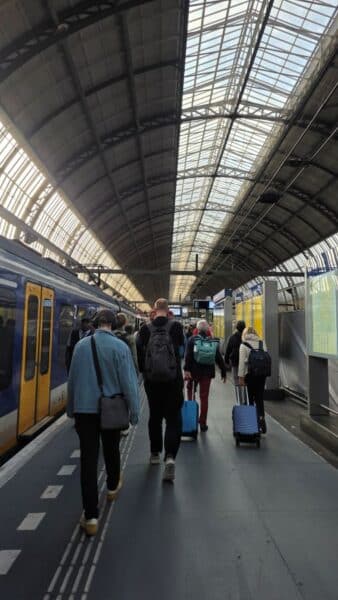
How Do You Pay for the Train in the Netherlands?
What is the best way to buy train tickets in the Netherlands? One of the most convenient aspects of train travel in the Netherlands is how to pay. The Dutch rail system supports contactless payment, allowing you to simply tap your credit or debit card—enabled with tap-to-pay—at the fare gates when entering and exiting the station. No need to queue for tickets or download special apps if you don’t want to; it’s as easy as tapping in and tapping out.
However, be aware that not all stations have traditional fare gates. In smaller towns or rural stops, you might encounter a standalone check-in pole instead of a gate. These can be easy to overlook, especially if you’re in a hurry or unfamiliar with the setup. Always keep an eye out for these poles to ensure your journey is properly registered and avoid any fines.
If you prefer a different method, you’re covered there, too. You can use a pre-purchased Rail Pass, buy a ticket at the station kiosks, or use the NS (Nederlandse Spoorwegen) mobile app to purchase digital tickets. Whether you’re a spontaneous traveler or a meticulous planner, the Dutch system offers flexible options to suit your style.

Tips for Your Journey
- Most Accurate Times & Delays: Download the NS app for the most accurate times and delays. If a problem is showing in red, it doesn’t always mean it will affect your travel time, so read closely.
- Google Maps: Google Maps has accurate times, platforms, routes, and stops, but I would always check against the app just in case.
- Transfers: If you need to make a transfer at a station, only tap out at your final destination.
- Credit Card Tip for International Visitors: Bring a credit card with tap-to-pay for ease and no foreign transaction fee to avoid additional charges.
- Cross-Borders Rides: Buy country-to-country tickets (for example, Netherlands to Belgium) in advance on the app to save money and guarantee a spot.
- If you arrive early and a train is sitting on the tracks, make sure it is the correct train. If it is not, the screen will usually show a “do not board” note on the electronic sign.
- Find your Class:Train cars are marked with their class (1 or 2). Red seats are for 1st class passengers, so make sure you are in the correct section for your ticket.
- Restrooms/Toilets: There are bathrooms on board most trains, but not all are unlocked. We noticed that rides about 45 minutes or longer seemed to have an open toilet. We all know how unique it is to find free ones in Europe, so my tip is to make sure you use it!
- Open the doors: If the doors do not open automatically, you will need to press a green button to open them when the train arrives at a station.

How to Cross Borders by Train
Because you are in the Schengen Region, crossing borders by train is simple as far as a passport standpoint. Purchase your tickets ahead of time on the NS app (you can save money this way) and use that ticket on your phone to tap in and out. The only tricky part is checking in and out of the Netherlands. You will scan your ticket at the gate to check in and then look for an international travel transfer station near the train departure area to check out before getting on the train.
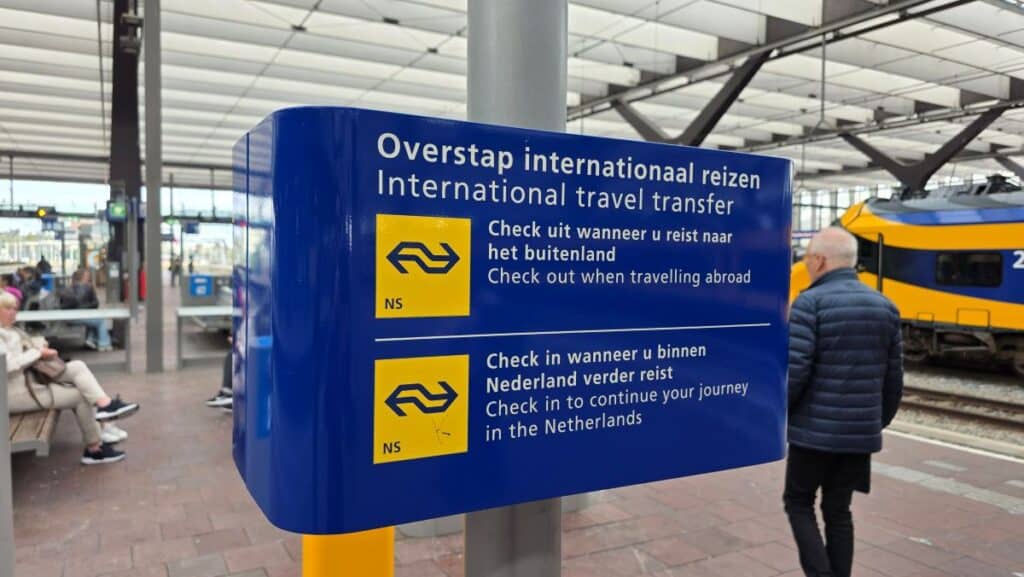
Don’t stress about the time, either, because when purchasing international train tickets on an app, you do not have to go on that specific train in the Netherlands. We weren’t happy about feeling like we needed to be on a schedule, but we found out the ticket is valid for travel from the departure station in the Netherlands to your destination abroad. You can use the ticket on any train that operates on the route, as long as it is valid for international travel.
Train Station Amenities

- Food and Grocery Options: Almost every train station we came across in the Netherlands had at least one small grocery store like Albert Heijn or a food vendor where travelers can easily grab to-go items like salads, sandwiches, snacks, and drinks.
- Toilets: Available at most train stations for a small fee, averaging around €0.70.
- Luggage storage: Lockers and staffed storage services are available at major stations like Amsterdam Centraal, Rotterdam, and Utrecht.
- Wi-Fi and charging stations: Free Wi-Fi is available at many stations, along with charging points for phones and laptops.
- Retail shops: Larger stations often include bookstores, fashion outlets, and souvenir shops.
- Bike parking and rentals: Most stations offer secure bike parking and OV-fiets rentals, making it easy to continue your journey by bicycle.
- Tourist information desks: Found in major hubs, these provide maps, brochures, and local travel advice.
Leave a Reply